Line striping might not be the flashiest part of a facility upgrade, but it's one of the most important for day-to-day safety. Clear, high-visibility lines keep traffic moving, guide drivers backing into loading docks, and separate pedestrian walkways from forklift lanes.
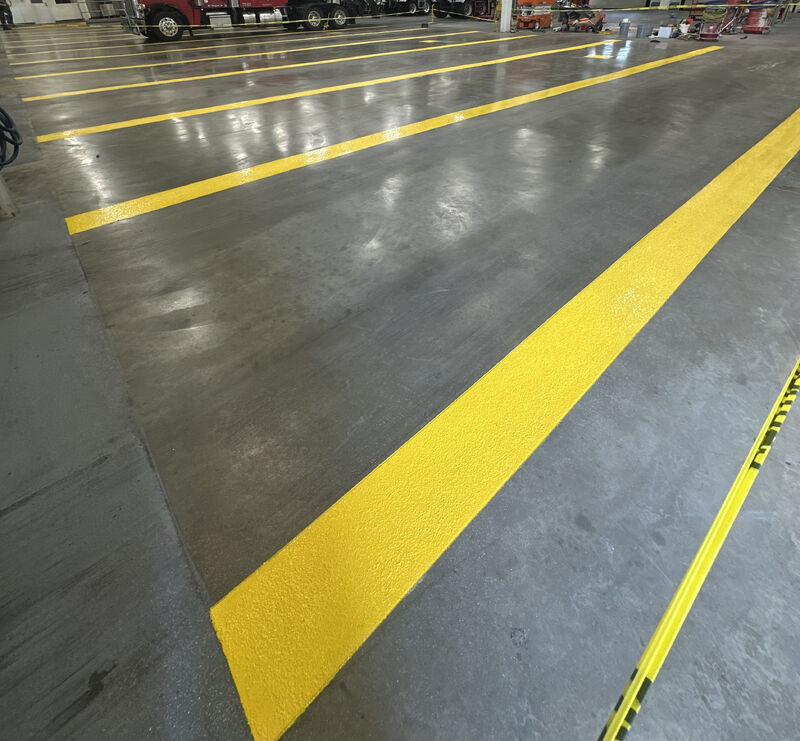
We just wrapped up a line striping project, and the difference is immediately visible — crisp yellow lines with a non-slip texture that you can feel underfoot. These aren't just paint on concrete. Our non-slip striping creates guidance that drivers and pedestrians can see and trust, even in wet conditions.
Why Non-Slip Matters
Standard painted lines look great on day one, but they get slick when wet — which is a problem in food processing environments where floors are constantly being washed down. Our non-slip striping uses an aggregate texture that maintains traction even in wet conditions, so the lines do more than just guide traffic — they keep people safe.
Where We Stripe
- Loading docks — backing guides, dock positioning lines
- Warehouse floors — forklift lanes, pedestrian walkways, storage zones
- Production areas — clean zone boundaries, equipment zones, safety perimeters
- Parking areas — stalls, fire lanes, directional arrows
Part of the Complete Package
Line striping is often the finishing touch on a bigger flooring project — we frequently add striping after installing SaniCrete STX or SaniCoat systems. But we also do standalone striping projects for facilities that need to refresh their floor markings or add new safety zones.
If your facility's lines are faded, slippery, or missing entirely, get in touch. It's a quick project that makes a big difference.